
Calm Your Breath Without Leaving Your Chair
Slowing your breath is a common comfort habit some people use during a busy workday. These patterns are quiet—fine for open offices. This page describes general techniques only; it does not treat anxiety disorders or other conditions.
Educational content · About this publisher · Stop if you feel dizzy
Try the Longer Exhale
Breathe Out Longer (About 2 Minutes)
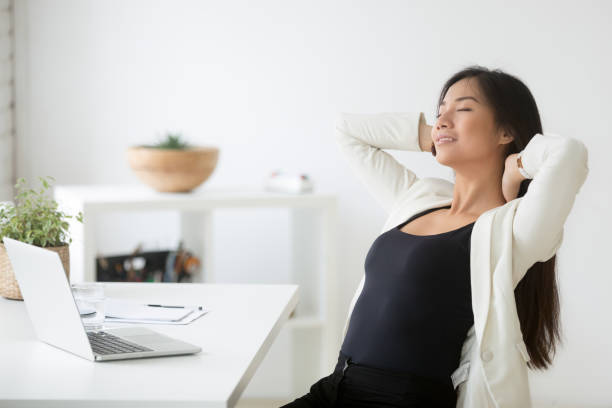
Making your exhale a little longer than your inhale can help your body feel calmer. Sit with both feet on the floor, hands on your thighs. Breathe through your nose if that is comfortable; otherwise breathe out through your mouth.
- Inhale quietly for a count of 4.
- Exhale smoothly for a count of 6–8.
- Pause briefly at the end of exhale without straining.
- Repeat for 8–12 cycles. Notice shoulder drop on each out-breath.
Tip: Place a sticky note on your monitor labeled “4 in, 6 out” for the first week until the rhythm feels natural.
Box Breathing When Your Mind Races (3–4 Minutes)
Breathe in, hold, breathe out, hold—for the same count each time (often four seconds). It gives your brain something simple to follow. If holding your breath feels uncomfortable, use three counts instead of four.
If holding breath feels uncomfortable, skip the holds and use extended exhale instead. Comfort and steady rhythm matter more than perfect counts.
Follow Along With the Breath Timer
When email piles up or a meeting stresses you out, a steady breath rhythm can help. The circle below grows and shrinks with each phase—follow it with your eyes. Pick a pattern, press Start, and keep both feet on the floor. If you feel dizzy, press Stop and breathe normally. Start with “longer exhale” if you are new; try box breathing when you want more structure; use “calming sigh” after a hard conversation.
Choose a breathing pattern
Press Start when you are ready
Longer exhale: breathe in for 4, out for 6–8. Box: in, hold, out, hold—4 counts each. Calming sigh: one deep breath in, a small extra sniff, then a long breath out.
When to use which pattern
Before a meeting: two minutes of longer exhale while you skim the agenda—nobody has to know you are doing it.
After a tense call: three calming sighs, then one round of box breathing before you write back.
Afternoon slump: box breathing with eyes open, looking at a blank wall. Skip closing your eyes if that makes you sleepy.
Everyone responds differently—notice what actually helps you feel a bit steadier, and stick with that.
Safety Reminders
Breathing exercises should never feel like gasping or spinning. Sit down if you practice longer patterns. People with respiratory conditions should ask a qualified provider which paced breathing styles are appropriate.
- Do not force maximum lung capacity; stay at 70–80% comfort.
- Avoid hyperventilation (rapid deep breaths) during acute anxiety spikes unless trained in a specific method.
- Return to normal breathing if tingling lasts more than a few seconds.
Common Questions
Will people hear me breathing?
Nasal breathing is quiet. Practice during low-noise moments or with office background sound. Mouth exhale can be subtle through pursed lips.
How is this different from meditation?
These are short physiological resets. Meditation often lasts longer and includes broader attention training. You can combine both.